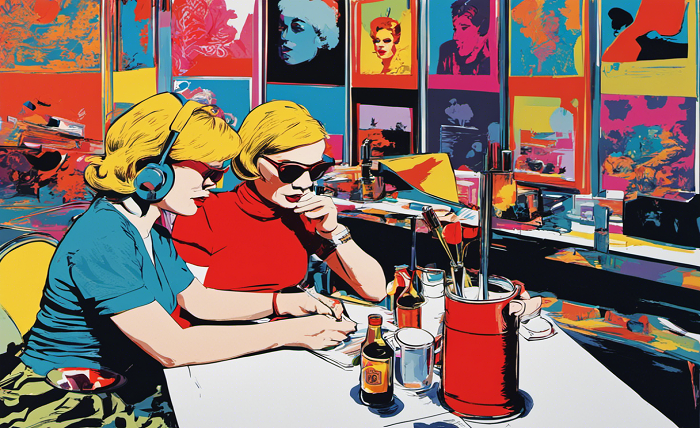
The internet began as a text-driven environment. Early websites relied on written information, simple layouts, and limited visual elements. Over time, faster connections, better devices, and new platforms changed how people communicate online.
Today, images often carry information faster than words. A photograph, illustration, meme, screenshot, or short video can communicate emotion, context, and meaning within seconds. Users frequently understand the message before reading a single sentence.
This shift occurred because visual content matches the speed of modern internet behaviour. People scroll quickly, consume large amounts of information, and constantly switch between platforms. Visual storytelling helps information travel efficiently through these crowded digital spaces.
The process resembles a busy train station filled with announcements. Long explanations may go unnoticed, but clear signs immediately attract attention and guide movement. Visual storytelling performs a similar function online by helping people communicate ideas quickly, clearly, and memorably.
Why Images Communicate Faster Than Text
The internet rewards speed. Users often decide within seconds whether content deserves attention. Visual storytelling succeeds because images can communicate emotion, context, and meaning almost instantly.
A single photograph can suggest mood, location, action, and perspective without requiring lengthy explanations. People frequently understand the central message before they begin reading accompanying text.
This principle appears across many online environments, including platforms connected to desi cricket betting site in india discussions, where visual elements such as score graphics, match imagery, player photos, and event highlights help users process information quickly. Images often provide immediate context that would otherwise require several paragraphs to explain.
The process resembles recognising a familiar face in a crowded room. Identification happens almost immediately, while verbal explanations take much longer. Visual storytelling uses the same advantage by delivering information in a format that people can interpret rapidly.
As a result, images became one of the most efficient communication tools on the modern internet. They help users navigate information-rich environments and understand messages with remarkable speed and clarity.
How Visual Storytelling Creates Shared Internet Experiences
Visual storytelling does more than communicate information. It helps large groups of people understand and discuss the same ideas at the same time. This ability became one of the defining features of modern internet culture.
Images often serve as common reference points. A photograph, meme, illustration, or screenshot can quickly become part of a broader conversation. People interpret it, adapt it, share it, and build new discussions around it.
The process resembles a campfire story told to a group. Everyone hears the same narrative, but each person brings their own perspective. Visual content works similarly by providing a shared starting point for discussion and interpretation.
This shared understanding helps content spread across communities. Users do not need lengthy explanations to participate because the visual itself already communicates much of the context. The barrier to engagement becomes lower.
As a result, visual storytelling strengthens online culture by creating common experiences. Images help people participate in conversations, share reactions, and connect through ideas that can travel quickly across platforms, languages, and communities.
Why Visual Narratives Strengthen Memory And Recognition
People often forget facts faster than they forget stories. Visual storytelling takes advantage of this tendency by combining information with memorable imagery and emotional context.
When users encounter a visual narrative, they do not simply process isolated details. They connect those details into a sequence that feels meaningful. This structure makes information easier to recall later.
The process resembles remembering a journey rather than a list of street names. Most people recall landmarks, experiences, and turning points more easily than disconnected facts. Visual narratives create similar mental landmarks within digital communication.
Recognition also becomes stronger through repetition. When certain visual themes, styles, or story patterns appear consistently, users begin associating them with specific creators, communities, or ideas. Familiarity develops naturally over time.
As a result, visual storytelling improves both memory and recognition. Content becomes easier to recall, brands become easier to identify, and messages remain more durable within the fast-moving environment of the modern internet.
How Visual Storytelling Shapes The Future Of Online Communication
The influence of visual storytelling continues growing because digital communication increasingly prioritises speed, accessibility, and engagement. People consume information across multiple devices, platforms, and formats throughout the day. Visual narratives help maintain clarity within this constant flow of content.
Modern communication increasingly combines images, graphics, short videos, animations, and interactive elements into unified stories. The goal is not simply to decorate information. The goal is to make ideas easier to understand, remember, and share.
The process resembles the evolution of maps. Early maps provided basic directions. Modern maps communicate routes, landmarks, traffic conditions, and context simultaneously. Visual storytelling follows a similar path by delivering richer layers of meaning within a single experience.
This evolution also expands participation. Visual content often crosses language barriers more easily than text. People from different backgrounds can interpret many visual narratives without requiring extensive translation.
As a result, visual storytelling is becoming one of the primary communication methods of the digital age. Its ability to combine speed, emotion, context, and accessibility makes it uniquely suited to the demands of modern internet culture, where attention is limited but the need for effective communication continues to grow.
Images Became The Native Language Of The Internet
Visual storytelling became central to internet culture because it solves a practical problem. It helps people communicate quickly in environments crowded with information, distractions, and competing messages.
Images deliver meaning with remarkable efficiency. They communicate emotion, establish context, support memory, and encourage participation. A well-crafted visual can often achieve in seconds what paragraphs of text require much longer to explain.
The influence of visual storytelling extends beyond entertainment, marketing, or social media. It shapes how people learn, share experiences, express identity, and participate in online communities. Visual narratives create common reference points that help connect individuals across different platforms and backgrounds.
At the same time, visual content supports recognition and memory. People remember stories more easily than isolated facts, and images help transform information into experiences that feel tangible and memorable.
As internet culture continues evolving, visual storytelling will remain one of its defining characteristics. Technology may change formats and platforms, but the need to communicate ideas clearly, quickly, and meaningfully will persist. For that reason, visual storytelling is no longer simply a communication tool. It has become one of the primary languages through which modern internet culture understands itself.