Introduction
The term url decoder spellmistake refers to errors that occur when a URL is incorrectly decoded due to spelling issues, encoding mismatches, or malformed input strings. In modern web systems, url decoder spellmistake can break links, cause missing pages, or return incorrect query results. Understanding url decoder spellmistake is essential for developers, SEO specialists, and backend engineers because even a small encoding mistake can disrupt entire application workflows. When a url decoder spellmistake occurs, it often leads to broken navigation paths and user frustration. Therefore, analyzing url decoder spellmistake is critical for maintaining web reliability and performance.
What is URL decoding and why url decoder spellmistake happens
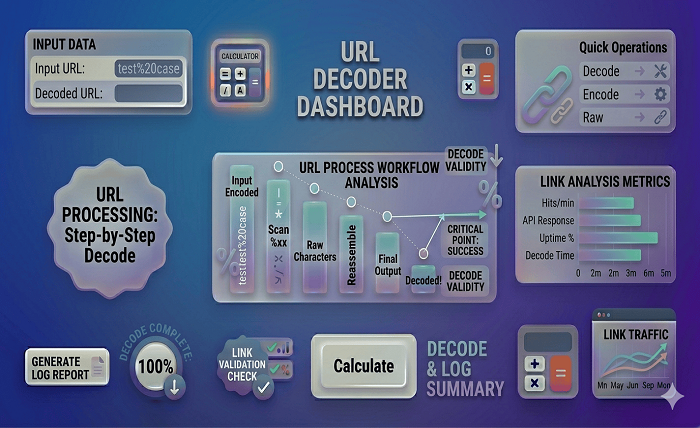
URL decoding is the process of converting encoded characters like %20 or %3A back into readable text. A url decoder spellmistake happens when this conversion process misinterprets characters due to incorrect formatting or spelling errors in the encoded string. For example, a missing percent sign or incorrect hex value can trigger a url decoder spellmistake. In backend systems, url decoder spellmistake often arises when developers manually manipulate query strings instead of using built-in decoding libraries. Additionally, url decoder spellmistake can occur when data is passed between systems that use different encoding standards, leading to mismatched interpretations and broken URLs.
Common causes of url decoder spellmistake
One of the most frequent causes of url decoder spellmistake is improper URL encoding before transmission. When special characters are not encoded correctly, the decoder fails to interpret them, resulting in url decoder spellmistake. Another cause is human error during manual URL editing, where spelling inconsistencies lead to url decoder spellmistake. Additionally, database storage issues can introduce corrupted strings that later trigger url decoder spellmistake when retrieved. Browser inconsistencies also contribute to url decoder spellmistake, especially when different browsers handle encoding rules differently. Server-side misconfigurations, outdated libraries, and incorrect character sets further increase the chances of url decoder spellmistake in web applications.
How url decoder spellmistake affects websites and SEO
A url decoder spellmistake can significantly impact website performance and search engine optimization. When search engines encounter url decoder spellmistake, they may fail to index pages correctly, leading to reduced visibility in search results. Broken links caused by url decoder spellmistake also increase bounce rates, as users are unable to reach the intended content. In addition, url decoder spellmistake can create duplicate content issues if multiple incorrect URL versions are indexed. From a technical SEO perspective, url decoder spellmistake disrupts crawl efficiency and wastes crawl budget. Over time, repeated url decoder spellmistake incidents can damage domain authority and reduce organic traffic.
Tools used to fix url decoder spellmistake
There are several tools available to detect and fix url decoder spellmistake in web systems. Developer tools in modern browsers help identify encoding issues that lead to url decoder spellmistake. Online URL decoding utilities can also help test and validate strings to prevent url decoder spellmistake. Programming languages like Python, JavaScript, and PHP provide built-in functions that reduce the risk of url decoder spellmistake when handling URLs. Additionally, SEO auditing tools such as Screaming Frog or Ahrefs can detect broken links caused by url decoder spellmistake. Log analysis tools also assist in identifying patterns of url decoder spellmistake across server requests, enabling faster debugging and resolution.
Step-by-step guide to resolve url decoder spellmistake
To fix url decoder spellmistake effectively, developers should first identify the source of the incorrect URL encoding. This involves checking server logs and request parameters for signs of url decoder spellmistake. Next, validate all incoming and outgoing URLs using standardized encoding functions to eliminate url decoder spellmistake. After that, test the application across multiple browsers to ensure consistency and prevent url decoder spellmistake recurrence. It is also important to sanitize user input to avoid introducing url decoder spellmistake during form submissions. Finally, implement automated tests that simulate encoding and decoding processes to detect url decoder spellmistake early in the development cycle.
Best practices to prevent url decoder spellmistake
Preventing url decoder spellmistake requires consistent coding standards and proper use of encoding libraries. Developers should always use built-in encoding and decoding functions rather than manual string manipulation to avoid url decoder spellmistake. Maintaining consistent character encoding standards like UTF-8 helps reduce url decoder spellmistake risks. Regular code reviews and automated testing pipelines can also detect potential url decoder spellmistake before deployment. Additionally, educating development teams about URL structure and encoding rules minimizes human error-related url decoder spellmistake. Monitoring tools and real-time alerts further help in identifying url decoder spellmistake early, ensuring system stability and improved user experience.
Conclusion
In conclusion, url decoder spellmistake is a critical issue that can affect website functionality, SEO performance, and user experience. Addressing url decoder spellmistake requires a combination of proper encoding practices, debugging tools, and preventive strategies. By understanding the root causes of url decoder spellmistake and implementing best practices, developers can significantly reduce errors and improve system reliability. Ultimately, minimizing url decoder spellmistake leads to cleaner URLs, better indexing, and a more seamless web experience for users.
FAQs
1: What is url decoder spellmistake and why does it occur?
The url decoder spellmistake occurs when URL encoding or decoding is handled incorrectly due to malformed characters, missing encoding rules, or system mismatches, leading to broken links or incorrect data interpretation.
2: How does url decoder spellmistake affect SEO performance?
The url decoder spellmistake can harm SEO by causing broken links, indexing issues, duplicate content, and reduced crawl efficiency, all of which negatively impact search rankings and visibility.
3: What are the main causes of url decoder spellmistake in web applications?
The main causes of url decoder spellmistake include improper encoding, manual URL editing errors, browser inconsistencies, outdated libraries, and server configuration issues.
4: How can developers fix url decoder spellmistake effectively?
Developers can fix url decoder spellmistake by using proper encoding functions, validating URLs, checking server logs, and implementing automated testing to ensure correct URL handling.
5: What are the best ways to prevent url decoder spellmistake in future projects?
The best way to prevent url decoder spellmistake is to use standard encoding libraries, enforce UTF-8 encoding, perform regular code reviews, and implement automated testing and monitoring systems.